We have helped countless companies just like yours across the UK every day for over 20 years. Here is what some of our previous clients have to say about us.
Director - Designer and Manufacturer
I would like to thank you and all of your staff for the way in which you have handled the administration. I have heard back from the staff and they are pleased with the response and help. Please thank all of your staff on our behalf for their sensitive professionalism and I will follow this thanks up with a letter to this effect.
Director - Uber Support Ltd
Very helpful service. Can’t thank you enough for all your help.
Verified 5 Star Review
Excellent service – Prompt, efficient & professional consultancy. Procedural breakdown was informative & provided accurate, clear guidelines.
Verified 5 Star Review
Very helpful & efficient service. All questions/queries were answered promptly & all steps clearly explained.
Verified 5 Star Review
Great communication and assistance ensured a speedy process to liquidation.
Director – Tech Company
They worked as a team with property and valuation specialists as well as with relevant management team members to seek the best outcome for the company, the staff and the creditors, while remaining focused on implementing a timely solution. I would be happy to use them again.
Director – National Recruiter
The team had a good understanding of our industry, so were able to react quickly and effectively to the needs of the business. Their communication and support throughout the whole process was outstanding, I would recommend their services should a business find itself in difficulty.
Director - Fudochi Limited
I was delighted with the service I received in relation to the voluntary liquidation of my company. The information I received was clear and concise. In short, they managed the entire process for me and made it a painless experience!
Verified 5 Star Review
I was well informed of the process, and kept updated on what was happening. A truly eye opening experience!
Director - Hoss Engineering
Very professional at every stage and kept things running smoothly.
Quick service and grocery brands account for a significant portion of the list. McDonald’s is mentioned by 15.5% of respondents, followed by Tesco at 13.3% and Amazon at 11.6%.
Supermarkets are particularly prominent, with Asda and Sainsbury’s also ranking highly. Many respondents link their frustration directly to price increases. One said they felt they were “spending more each shop but seeing less value,” while another commented that prices had “risen without any obvious improvement in what you get.”
Big Tech and Online Retail Not Exempt
Large digital brands are also feeling the effects of shifting consumer sentiment. Amazon appears among the top three most distrusted brands, while Apple is cited by nearly one in ten respondents.
The findings suggest that scale, convenience and long-standing brand loyalty are no longer enough to offset concerns around cost and perceived value, particularly in a more price-sensitive market.
Retail and Fashion Brands Reflect Changing Expectations
General retail and fashion brands also appear frequently. Primark is named by 10.9% of respondents, while WHSmith is cited by 6.9%.
Mid-market clothing brands such as Next (6.2%) and River Island (5.9%) further indicate that trust pressures are not limited to either budget or premium segments, but are being felt across the retail landscape.
Airlines Continue to Struggle With Perception
The travel sector remains an area of concern for consumers. Ryanair is mentioned by 8.0% of respondents, while British Airways and easyJet are both cited by 6.1%.
Virgin Atlantic appears at 5.1%, reinforcing the idea that service reliability, disruption and customer support continue to play a major role in shaping opinions. Nearly one in five respondents overall point to poor customer service as a key reason for losing trust.
Value and Experience Now Central to Trust
Across all industries, a clear pattern emerges: trust is increasingly shaped by everyday experiences rather than headlines or scandals alone. While 11% of respondents mention negative coverage as a factor, far more link their loss of trust to personal interactions, service quality and price.
With more than 30% of trust erosion tied to customer service and quality issues, and cost pressures leading overall, consumers are reassessing whether brands still offer genuine value. As one respondent summarised, “it doesn’t feel worth it anymore.”
Comment From Liquidation Centre
Richard Hunt, Director at
Liquidation Centre, said:
“People are not expecting perfection, but they do expect fairness.
If prices go up, they want to feel the quality and service still justify it.
When that balance disappears, trust goes with it, and once that is lost, it is very difficult to win back.
What this shows is that consumers are paying much closer attention to the everyday value they are getting.
Small frustrations add up over time, whether that is higher prices, poorer service or simply feeling that standards have slipped.
Brands that remain consistent and deliver what customers expect will come through this, while those that do not risk losing people for good.”
Methodology
Liquidation Centre surveyed 2,000 UK adults in April 2026 via an online questionnaire to understand attitudes toward brand trust and purchasing behaviour.
Participants were asked which brands they no longer trust, their reasons for this change, and whether they would consider returning to those brands. The results were weighted to reflect the UK adult population by age, gender and region. Percentages are based on the full sample unless stated otherwise. Open-text responses were lightly edited for clarity.
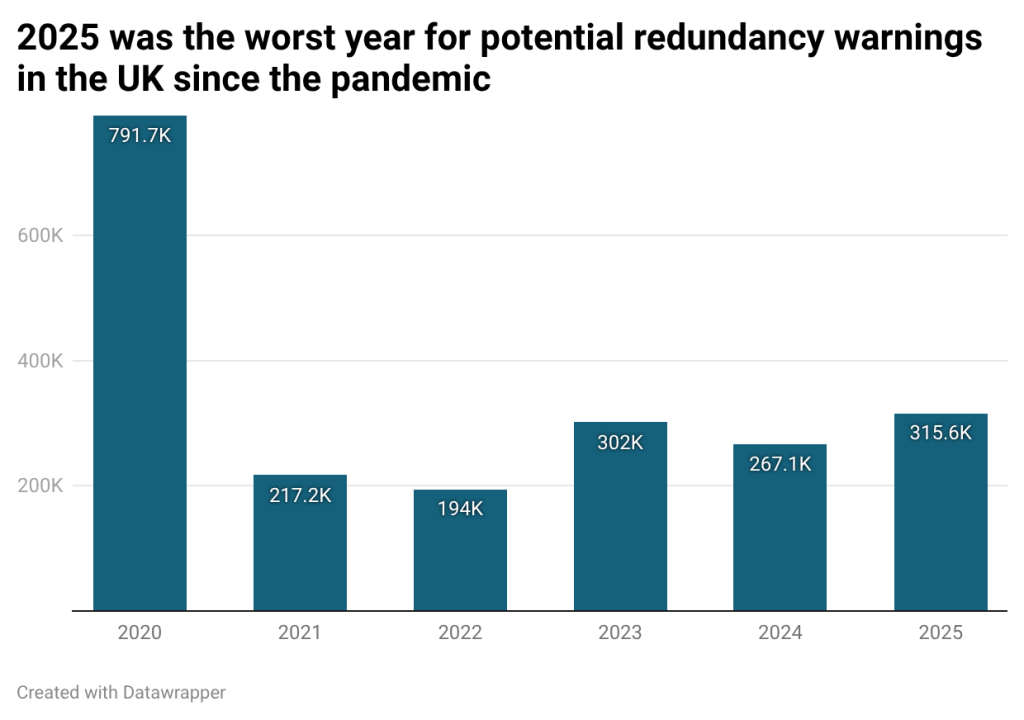
Now, new data sourced by the experts at Liquidation Centre has revealed that 2025 was the most severe year for redundancy warnings since 2020, with 315,605 jobs flagged for potential redundancy and redundancy payouts totalling £477,709,323 in 2025.
The experts at Liquidation Centre, a trusted UK liquidation firm focused on solvent liquidations (MVL), for contractors and small business owners, while also supporting Creditors’ Voluntary Liquidations (CVL) for insolvent businesses, sent a Freedom of Information request to the Insolvency Service to determine how many employers made or planned redundancies and the expected redundancy payout for proposed dismissals from 2020 to 2025.
Study highlights:
2025 was the worst year since COVID for redundancies, with 315,605 jobs flagged for potential redundancy with a combined payout of £477,709,323
In the first two months of 2026, 736 employers have already filed for proposed redundancies, putting 56,396 jobs at risk of redundancy – 9% higher than in 2025
The number of HR1 advance notice of redundancy forms issued in February 2026 (430) is almost identical to February 2009 (433), shortly before the recession peak
Over 2 million redundancy warnings were made between 2020 and 2025(2,087,709), with June appearing as the worst month for redundancies in the UK
Redundancies rose by 45% between 2021 and 2025
Liquidation Centre’s Freedom of Information request uncovered that over 2 million redundancy warnings were issued between 2020 and 2025 (2,087,709), with 2025 the most severe year for redundancy warnings in the past five years. Last year, 315,605 jobs were flagged for potential redundancy, a 45% increase since 2021, with redundancy payouts totalling £477,709,323.
Redundancies already up 9% year-on-year in 2026
Because redundancy warnings are typically filed weeks or months before job losses take effect, the elevated figures seen in 2025 may persist into early 2026.
In the first two months of 2026, 736 employers filed for proposed redundancies, putting 56,396 jobs at risk of redundancy, compared to the first two months of 2025, which were 51,905 redundancy warnings, a 8.65% increase in warnings.
The number of HR1 advance notice of redundancy forms issued in February 2026 (430) is almost identical to February 2009 (433), shortly before the peak of the 2008-2009 recession, highlighting the scale of pressure currently facing the UK labour market.
Using historical redundancy data, the experts at Liquidation Centre estimate that 2026 could see as many as 327,227 redundancies, with 11,622 more jobs lost than in 2025. This marks a forecasted 3.7% increase from 2025; however, this is less severe than that of 2024-2025, which saw an 18.1% increase in redundancies.
Richard Hunt, Director at Liquidation Centre, weighs in on why 2026 may be another record year for redundancies:
“Redundancies are happening at a rapid pace in the UK as the economy continues to change and industries adapt. including automation and AI. Unlike in 2020, when redundancies were largely driven by a single crisis, the rise in redundancy warnings in 2025 appears to reflect more ongoing pressures on employers. These include rising operating costs, wage inflation, and policy changes such as higher employer National Insurance contributions.
2026 is already shaping up to be an unfortunate record year for redundancies. Increased competition, cost of living, taxation, and wage inflation are all key contributing factors. Global political uncertainty often has a knock-on effect on businesses worldwide, and the UK is no exception. Disrupted trade and supply chains, rising operating costs, and poor business confidence are likely to add further strain for businesses.”
What are the biggest red flags that businesses are in trouble?
So, what red flags might suggest companies are headed for trouble, and how do you spot these signs early on? Richard Hunt, Director at Liquidation Centre, weighs in:
🚩Increase in cost of sales
🚩Unexpected staff departures or leadership changes
🚩The loss of a key customer or a delay in customer payments
“Spotting the warning signs early is crucial. A business that’s becoming increasingly reliant on loans or credit to stay afloat should see that as a serious sign that something needs to change. Missing payments to suppliers or experiencing pressure from creditors is another major concern.
Sales figures might still look reasonable on the surface, but even a gradual decline should trigger a closer look at your figures. Pressure from HMRC is another serious sign, whether it’s reminders, penalties, or formal warnings. If you’re receiving legal letters from creditors, like a CCJ, things have already escalated, and that’s the point when businesses often reach out to us in urgent need of help.”
Liquidation Centre is a UK liquidation firm specialising in Members’ Voluntary Liquidations (MVL) for solvent companies, trusted by contractors, small and medium-sized business owners, and company directors across the UK. It also assists businesses with Creditors’ Voluntary Liquidations (CVL) when companies become insolvent and need to close in accordance with UK insolvency law.
Methodology:
To gather data for this study, Liquidation Centre sent a Freedom of Information request to the Insolvency Service to determine how many employers made or planned redundancies and the expected redundancy payout for proposed dismissals from 2020 to 2025.
The following questions were sent to the Insolvency Service:
For the period 1 April 2024 to 31 March 2025, please provide the following, broken down by month:
The total number of proposed dismissals notified
The total number of employers submitting notifications
The number of notifications involving 20 or more proposed redundancies
The total estimated value (£) of redundancy payments expected to be paid, based on redundancy notifications or claims received during this period
Only if held, the number of cases contributing to this total.
For the period 1 April 2025 to the most recent date for which data is held, please provide the same information as outlined in Q1, broken down by month.
The study is based solely on information provided directly by the Insolvency Service and the Redundancy Payments Office in response to the Freedom of Information request outlined above. No responsibility is assumed for any inaccuracies resulting from erroneous data provided by the bodies.
All data is correct as of February 2026. Should any service wish to provide updated data, then they can do so by emailing: tori@journalistic.org outlining updates to the data and the reasons behind them.
New reports suggest the UK job market is “floundering”, as businesses continue to hold back on recruitment amid economic instability and mounting operational costs. With increases to National Insurance, the Minimum Wage, and the National Living Wage scheduled from April, companies are set to face additional financial strain, potentially forcing some to make difficult decisions in the coming months.
New data from Liquidation Centre highlights the UK locations most affected by business closures, using official data from the Insolvency Service and the ONS. The findings pinpoint the country’s liquidation hotspots, revealing a growing divide between regions. Richard Hunt, Director at Liquidation Centre, gives his thoughts on what these trends could mean for local economies, high streets, and jobs.
Key Findings:
Norwich, in the East of England, records the highest business liquidation rate nationwide — and early 2026 figures suggest the situation is worsening.
Chorley and Burnley take second and third place, with liquidation rates of 20.55% and 12.03%.
Overall, the North West has the highest regional liquidation rate at 3.26%, with several of its towns appearing in the UK’s top 10.
The UK’s Worst Places to Run a Business
Newly compiled data reveals several smaller towns recording some of the highest business failure rates in the country, with Norwich emerging as the UK’s top hotspot for company liquidations.
Norwich ranks as the worst‑affected area, with a liquidation rate of 23.27%. Out of 14,807 registered companies, 3,446 have gone into liquidation, meaning almost one in four businesses has closed this way. The city saw its highest number of liquidations in 2025 (805), while the steepest year‑on‑year rise occurred in 2021, likely a hangover from the pandemic. With 311 liquidations already recorded in 2026, the city may be on course for another challenging year.
Chorley sits just behind Norwich with a 20.55% liquidation rate and 1,908 business closures. The data suggests smaller local economies may be particularly sensitive to rising operating costs and weaker consumer demand. Chorley experienced its highest volume of liquidations in 2025 (596), and in the first part of 2026 alone has already recorded 186 closures.
Burnley ranks third, showing a liquidation rate of 12.03% and 633 companies folding. The town recorded 184 liquidations in 2025, and with 39 already logged for 2026, current trends suggest that Burnley could exceed 200 liquidations this year, potentially its worst year on record.
The North West as a whole continues to feel the pressure, as rising costs push many firms to the edge. With a regional liquidation rate of 3.26%, it now has the highest closure rate in the UK. A full breakdown of regional performance is available in the complete dataset.
Blaby – 8.36% liquidation rate (690 businesses)
In fourth place is Blaby, recording an 8.36% liquidation rate. Of the 8,249 registered businesses in this Leicestershire district, 690 have gone into liquidation. While lower than the top three areas, the figures still highlight the widespread financial hurdles facing UK firms.
Expert Comment
Richard Hunt, Director at Liquidation Centre, discusses what the data means for communities and local high streets:
“These figures show just how tough the environment has become for businesses across the UK, particularly in smaller towns. When companies enter liquidation this has a real visible impact on the local economy, especially on high streets. When businesses close their doors, it creates empty shop fronts, fewer jobs, and reduced footfall for other businesses. Over time, that makes it harder for the rest of the high street to survive.”
“With costs set to rise in April, including National Insurance, the Minimum Wage, and the National Living Wage, it’s more important than ever for directors to keep a close eye on cash flow, manage overheads carefully, and act early. Many business failures happen not because the warning signs aren’t there, but because tough decisions are left too late. By regularly checking stock, pricing, and staffing, businesses can respond quickly when numbers start slipping and give themselves a better chance of staying profitable. In this uncertain climate, being proactive can make all the difference.”
Methodology:
Liquidation Centre conducted this study to identify and analyse the most and least suitable locations to run a business in the UK. To achieve this, data was sourced from the Free Company Data product published by the UK government, which provides year-on-year information for all registered companies. In total, ~5.5 million businesses were analysed, with data dating back to 2016.
To support this, the Business Demography UK dataset was also used to categorise successful businesses across different broad sectors.
The raw dataset contains various business registration metrics for each company registered in the UK, including the registered address. To derive location-level data, such as region and local authority, postcodes were geocoded using Postcode.io, a free UK service that converts postcodes into geographic coordinates for all the registered companies.
To associate geocoded companies with regions and local authorities, two separate shapefiles were used, one for each category. These were then spatially joined to calculate aggregated statistics at both the regional and local authority levels.
To rank the aggregated data, the liquidation rate was calculated based on the total number of businesses and the number of companies with the following statuses:
Data for “active businesses (2019–2024)” and “business deaths (2019–2024)” for each defined category were extracted from the Business Demography dataset. Categories were then ranked using the active-to-death ratio to identify the best and worst types of businesses to run in the UK.
Caveats:
The main dataset does not include exact liquidation dates or the date when a liquidation claim was raised. Instead, the liquidation date was approximated using the “ConfStmtNextDueDate” field for companies with a liquidation status. While not exact, this provides a reasonable estimate.
The “deaths of enterprise” metric from the Business demographics dataset was excluded due to the way it was recorded: ” A death is recorded if a business was present in the active file in year t but not in years t+1 and t+2″. This approach may also include businesses that changed names, were sold, or stopped trading, introducing some discrepancies.
Data was collected February 2026, and is accurate as of then.
You can apply to the court for permission to reuse the company name. The application must usually be made within seven business days of liquidation, and timing is critical.
3. Using an Existing Company Name
If you already have another company that’s been trading under that name (or something very similar) for at least 12 months before liquidation, the restriction doesn’t apply.
Most people choose to buy the business from the liquidator, but whichever option you choose, you should seek advice from a solicitor and make sure you’ve followed all the legal requirements.
What Is the Notice Requirement?
If you intend to reuse a company name under the permitted exceptions, you must:
Notify creditors of the old company
Place a formal notice in the London Gazette
There is a government-issued template available, but accuracy and deadlines are crucial. A mistake could result in personal liability.
Why Getting Professional Advice First Matters
If you’re thinking about reusing a company name, it’s not something you should try to figure out on your own. While a liquidator handles the closure of the insolvent company, they cannot advise you on how to reuse the name. The rules are strict, and you will need support from a solicitor or accountant who understands the legal framework.
Although there will be professional fees involved, it will be a small price compared to the risks of being fined, banned as a director or held personally liable for company debts.
If you are considering starting again after liquidation, taking professional advice early will help you get the process right, avoid unnecessary risk, and move forward confidently.
If the company owns assets such as equipment, stock, vehicles or property, these will usually be realised by the liquidator during the liquidation process.
The funds recovered are distributed in accordance with insolvency law. This includes covering the costs of the liquidation first, followed by payments to creditors where funds allow.
In some cases, asset realisations are enough to cover the full liquidation costs. Where they are not, an additional contribution may be required.
Can Directors Claim Redundancy to Pay for Liquidation?
Many directors are unaware that they may be eligible to claim statutory redundancy if they:
Were paid under PAYE
Worked regular hours
Meet the qualifying criteria
The amount you can claim depends on your age, length of service and salary. While redundancy payments are not guaranteed and may not always cover liquidation fees in full, they can provide valuable financial support when closing an insolvent company.
Can Liquidation Fees Be Paid in Instalments?
In certain circumstances, a licensed insolvency practitioner may agree to a payment arrangement that allows liquidation fees to be paid in instalments.
Where company assets and redundancy claims are insufficient, directors sometimes make a personal contribution. While this is not ideal, it can allow the company to enter liquidation properly and reduce the risk of ongoing legal exposure.
Why Liquidation Costs Are Unavoidable
Continuing to trade while a company is insolvent may expose directors to potential claims under the Insolvency Act 1986.
Worried About How to Fund Liquidation?
If you are concerned about how to pay for liquidation, you are not alone. There are often practical solutions available, whether through company assets, redundancy claims, or structured payment arrangements, that can make liquidation more manageable.
Our team can talk you through the available options and help you decide on the most appropriate next steps for your circumstances.
To support businesses navigating these pressures, Liquidation Centre has shared practical steps that pubs and wider hospitality operators can take to regain control before difficulties escalate. Richard Hunt, Director of Liquidation Centre, offers insight into the actions that can make a tangible difference.
Five Key Steps to Help Prevent UK Pubs Insolvency
1. Carry Out a Detailed Cost Audit
Understanding exactly where money is being lost is essential. A full cost audit can highlight inefficient supplier contracts, unnecessary spending, stock waste, and rising utility expenses.
Richard Hunt explains: “For pub owners, margins are tighter than they have been in years. No one opens a pub expecting to worry about insolvency, but the sooner you take a close look at the numbers, the more control you keep. A cost audit can reveal where money is slipping away and fix those pressure points before they spiral.”
2. Review Pricing Regularly
Strategic pricing updates allow pubs to protect profitability while avoiding sudden increases that frustrate customers.
“Small, meaningful adjustments such as introducing premium menu offerings or rebalancing prices across the menu can boost profitability without impacting every product. Pricing strategies that are clear and well executed help pubs respond more confidently to market pressures, rather than reacting too late, when steep price changes could result in damaging customer trust.”
3. Examine and Renegotiate Lease Agreements
Fixed costs like rent often put the heaviest strain on businesses during slower trading periods. Reviewing lease terms can unlock opportunities for reduction or renegotiation.
“Taking a close look at lease costs can open the door to renegotiation and give businesses more breathing room. It’s a practical step that can ease pressure on overheads and help pubs stay resilient during tougher trading periods, while building a bit of financial headroom.”
4. Explore Additional Revenue Streams
With drink sales alone no longer a reliable foundation, diversification is key to stability.
“Transforming the pub into a space that offers more than just drinks can open up new income streams. Quiz nights, daytime co-working offers, lunch deals, or even selling local products can all bring in extra revenue and attract a broader mix of customers.”
5. Speak to Advisors and Lenders Early
Engaging early with professional advisors gives businesses more options, and reduces the danger of sliding toward insolvency unnoticed.
“Insolvency practitioners and advisors can bring experience most operators simply don’t have in-house. From cash flow forecasting to landlord negotiations, the key is knowing whether the business is facing a short-term liquidity problem or if there’s a deeper profitability issue. This can help to differentiate between a business that may simply have a temporary liquidity problem, one which may need restructuring, or a business with profitability issues. All of these need to be tackled in a unique and accurate way, making this distinction vital.”
Additional Guidance for Pubs and Hospitality Businesses
Hunt also stresses the importance of focusing on stock management, menu engineering, and staffing to maintain financial control.
Richard Hunt adds: “Alongside the above, struggling pubs and hospitality firms may also consider menu engineering and stock optimisation. This can boost the pub’s basic foundations by reducing wasteful spending on unprofitable items and focusing more on high-margin, popular drinks/dishes that support cash flow. With business costs remaining high for many establishments, making sure stock and resources are used effectively can play an important role in reducing the risk of insolvency.
“Another key area to keep under control is staffing. Smart staffing solutions and choices can keep a business afloat in a tough climate. Keep workforce capacity in line with customer demand and regularly analyse payrolls to keep this manageable. At the same time, it’s important not to compromise on service quality, as maintaining a loyal customer base is vital during challenging economic periods. Above all, never ignore any financial warning signs. Acting early can make all the difference, while leaving it too late may result in insolvency that could have been avoided.”
Press Release Notes:
If republishing, please credit Liquidation Centre with a link to: https://liquidationcentre.co.uk/
With business liquidations predicted to remain at elevated levels in 2026, the insolvency practitioners Liquidation Centre have analysed data from 5.5 millions businesses across UK town centres, to reveal where Britain’s high street crisis is most prolific. Richard Hunt, Director of Liquidation Centre provides insight into the findings and reveals key advice for businesses in 2026.
UK Town Centres with the Highest Number of Liquidated Companies
Rank
Town centers
Number of companies within 500m radius
Liquidation rate (%)
Liquidated companies
1
Norwich
6324
46.4%
2933
2
Manchester
12945
19.6%
2534
3
Glasgow City
14416
11.5%
1655
4
Leeds
6637
20.2%
1339
5
City of London
31142
4.5%
1288
6
Liverpool
7032
15.1%
1059
7
Hackney
107976
0.8%
861
8
Camden
27497
2.6%
724
9
Nottingham
4032
17.0%
686
10
Southend-on-Sea
3198
21.3%
680
*The full data set including all cities and figures is available to view here.
Norwich sees 46% companies fall into liquidation, highest in UK
Norwich ranks as the town centre with the highest number of liquidated companies among all areas analysed, with an alarming liquidation rate of 46.4%. Although Norwich leads the list in terms of total liquidations, the data indicates this was largely driven by the impact of the COVID-19 pandemic, with the sharpest increase occurring in 2021.
More recent year-on-year figures indicate a recovery for Norwich’s town centre, suggesting improving conditions for local businesses. As the city moves into 2026, this recovery highlights the importance of strong, forward-looking business strategies to support long-term resilience. Takeaway food shops and mobile food stands are among the sectors in Norwich currently seeing the highest level of liquidations.
Manchester ranks second as one in five businesses liquidated
Manchester follows with 2,534 liquidated companies, although its liquidation rate is lower than Norwich’s, due to a higher concentration of businesses within the town centre. Despite this, businesses in Manchester should still stay vigilant in 2026, as almost one in five town centre businesses have fallen into liquidation in recent years.
Glasgow City businesses facing increasing pressure in town centre
In third, Glasgow City has a total of 1,655 liquidated companies, with a liquidation rate of 11.5%. While the city’s large concentration of businesses helps to keep its overall liquidation rate comparatively lower, recent trends point to rising pressure. 2024 saw a huge 94.6% increase in the number of liquidated companies in the area, with 2025 seeing a further 37.5% jump. Businesses in Glasgow City need to be attentive to figures and act on any downfalls early to avoid another increase in 2026.
Leeds town centre sees number of liquidations double from 2023-2025
Leeds falls fourth in the ranking, with 1,339 companies falling into liquidation. Despite recording fewer liquidations than Glasgow City, Leeds has a higher liquidation rate of 20%, reflecting a smaller overall concentration of businesses within its town centre. Leeds has seen town centre liquidations more than double from 2023 to 2025.
City of London saw a 70% increase in the number of liquidations in 2025
The UK’s capital ranks fifth, as the City of London has 1,288 liquidated companies. Despite this, its liquidation rate is one of the lowest at just 4%, due to the high volume of businesses within a 500m radius. 2025 saw a 70% increase in the number of liquidations compared to that of 2024.
Liverpool town centre businesses face pressure as liquidations steadily rising
Among the town centres with the highest liquidated companies, Liverpool stands out due to a consistently rising year-on-year trend. Liquidations in the city’s town centre have increased steadily since 2020, signalling growing and sustained pressure on local businesses.
The High Street Business Sectors with the Most Liquidations
Rank
Business Sectors
Number of Liquidations
1
Licensed restaurants
986
2
Management consultancy activities other than financial management
961
3
Development of building projects
857
4
Information technology consultancy activities
609
5
Other letting and operating of own or leased real estate
424
Across town centres analysed, the sectors most frequently affected by insolvency include real estate, food and beverage services, takeaways, and pubs.
Richard Hunt, Director at Liquidation Centre comments on the data alongside vital business advice for 2026:
“The data highlights just how volatile recent years have been and continue to be for high street businesses, while also revealing the areas of the UK where local economies may be under the greatest strain. These pressures are often driven by a combination of reduced footfall, rising operating costs, and wider economic uncertainty.
“In 2026, businesses should prioritise disciplined cash flow monitoring, flexible overheads, and realistic growth plans. This approach allows directors to recognise when support is needed, enabling them to act early rather than waiting until problems become irreversible, significantly improving their chances of avoiding liquidation.
“Businesses need to plan for fluctuations in footfall, rising costs and weaker consumer confidence. Those that regularly review stock levels, pricing, and staffing can act early when numbers slip, and are more likely to stay profitable as a result. Too often, liquidations occur not because warning signs weren’t visible, but because difficult decisions were delayed.”
Liquidation Centre conducted this study to identify and analyse failed high street businesses in the UK. To achieve this, data was sourced from the Free Company Data product published by the UK government, which provides year-on-year information for all registered companies. In total, 5.5 million businesses were analysed, with data dating back to 2016.
Since there was no direct data available for high streets in the UK, an approximation of high streets was derived based on business concentration (town centres). These were derived using the following criteria:
For each local authority in the geocoded data, a 50m² grid was overlayed for that LA.
Then for each grid as a point in a particular LA, the number of businesses within a 500m radius was counted.
The points with the business density were sorted and the point with the highest number of businesses within a 500m radius was taken as the town centre.
These derived town centres were then spatially joined with all the registered businesses to get the number of “High street” businesses.
The raw dataset contains various business registration metrics for each company registered in the UK, including the registered address. To derive location-level data, such as region and local authority, postcodes were geocoded using Postcodes.io, a free UK service that converts postcodes into geographic coordinates for all the registered companies.
To associate geocoded companies with regions and local authorities, two separate shapefiles were used, one for each category. These were then spatially joined to calculate aggregated statistics at both the regional and local authority levels.
To rank the aggregated data, the liquidation rate was calculated based on the total number of businesses and the number of companies with the following statuses:
The main dataset does not include exact liquidation dates or the date when a liquidation claim was raised. Instead, the liquidation date was approximated using the “ConfStmtNextDueDate” field for companies with a liquidation status. While not exact, this provides a reasonable estimate.
The town centres were filtered for only centres with at least 1,500 businesses within a 500m radius.
Five costly mistakes retail businesses make before shutting down
1. Ignoring customer service and feedback
Delivering great customer service is at the heart of every successful retail business, so neglecting it can be one of the biggest red flags before things go wrong. Listening to customer feedback helps identify weak spots early on, and failing to do so can quickly lead to negative reviews, falling sales, and a damaged reputation.
Making sure staff are well trained and confident in handling customer queries goes a long way. Satisfied customers tend to return, and recommend you to others, so prioritising service should never slip off the radar.
2. Operating without a clear marketing plan
One of the most damaging mistakes a retail business can make is failing to plan its marketing properly. Without a defined strategy, it’s easy to lose focus, miss the target audience, and see sales suffer.
Taking time to understand who your customers are, and how they consume media, can make all the difference. Using data insights can also help shape marketing campaigns that actually reach and convert the right people.
3. Poor inventory management
Getting stock management wrong is a common cause of trouble for retail businesses. Understocking risks losing customers, while overstocking ties up cash and eats into profits.
Using an inventory management system can help track stock levels, supplier orders, and sales trends, giving better control and reducing the likelihood of costly mistakes.
4. Falling behind on market trends
Keeping an eye on what customers are currently buying, or looking for, is crucial. Retailers that fail to adapt to shifting trends risk losing business to competitors who are faster to react.
Regularly reviewing what’s happening in the market can help ensure stock remains relevant and appealing to customers, supporting more consistent sales.
5. Neglecting technology
Technology is one of the biggest enablers for retail efficiency, yet many businesses are slow to make use of it. Tools like CRM systems, POS software, and inventory platforms can save huge amounts of time and improve both customer experience and internal processes.
Adopting the right tech can make operations smoother, enhance customer satisfaction, and help a business stay competitive.
Richard Hunt, Insolvency Practitioner at Liquidation Centre, adds:
“Maintaining a successful business is never easy, so the fewer mistakes business owners make, the better. Paying attention to your customer base, their wants and needs, is absolutely crucial because the success of your business depends on them. That and other essential bits, like keeping inventory, tracking bills, and paying employees have been made easier nowadays due to new technology. Don’t be afraid to adopt new tech, as in most cases it will end up saving you time and resources. And even if you make a mistake, do your best to fix it, learn from it and aim to not repeat it.”
With increased annual leave around the festive period and shifts in customer behaviour, many businesses, particularly those outside of retail and hospitality, experience a drop in revenue between December and January. To stay ahead, it’s essential to understand how to navigate this seasonal slowdown and turn it into a positive period for your business.
Richard Hunt, Director at Liquidation Centre, explains:
“The festive season can be a difficult time to navigate for business owners, especially if your services aren’t in high demand at this time of year. People’s priorities shift, and naturally their buying habits do too.”
“It’s not just customers who behave differently during winter. Employees will have to navigate changes such as longer days, shifts in their routine and different responsibilities to juggle. With more staff taking annual leave, remaining team members often face higher workloads, which can lead to lower morale and a heightened risk of burnout.”
“Understanding the changes in consumer behaviour, planning for drops in revenue, tighter budgets and making sure your team feels supported can be a lot to juggle. That’s why it’s so important to communicate clearly, plan ahead, and ensure your team knows what support is available.”
Expert tips on navigating the “winter slump”:
Plan ahead: The winter slump refers to a recurring drop in sales between December- January, so it really helps to look back at your previous years’ numbers. Understanding your usual patterns makes it much easier to prepare and set realistic expectations for the months ahead.
Richard adds:
“Analysing seasonal trends for your business is a really useful way to plan ahead. You need to be aware of any recurring dips in performance so you can set yourself realistic goals for this period. so it really helps to look back at your previous years’ numbers. Understanding your usual patterns makes it much easier to prepare and set realistic expectations for the months ahead.”
Staff development and training: As you plan for a slower season, it’s a great opportunity to upskill staff and prioritise professional and personal development. Use this time to conduct staff training sessions that can boost morale, improve efficiency, and better equip your team for the busier periods ahead in the new year.
“Slower periods are a great time to invest in your team. Speak to staff about how they want to grow, both professionally and personally. Upskilling now can strengthen your team’s capabilities and ensure you’re even better prepared when business picks up again.”
Evaluate your processes: Assessing your processes and systems is a great use of energy during the winter months. It’s the perfect time to sit back and reflect on what’s working, identify inefficiencies, and implement meaningful changes so that the new year ahead can be a productive and successful one.
“The goal is to create the most productive and streamlined processes possible, however during the busiest times for your business, it is rare that you have time to sit back and evaluate them properly. A quieter season offers the perfect opportunity to assess your processes, identify opportunities for automation and review your website and customer facing products to ensure they are as streamlined and effective as possible.”
Stay engaged: Even if sales slow down, your audience is still out there. Keeping your marketing consistent and staying connected with customers helps make sure your business remains front of mind when things pick up again.
“Even though customers may be less active during winter, they’ll usually return to their normal habits afterwards. Keeping your brand visible and staying in touch with your audience means that when they’re ready to buy again, your business is one they’ll remember.”
Richard Hunt concludes:
“Although winter sales may follow a predictable downward trend for some industries, it’s important to re-focus your energy and outlook to turn the slower months into a positive for your business. It’s the perfect time to sit back, pause, re-evaluate, and re-align your strategy, ultimately preparing your business to come back stronger when demand picks up again in 2026.”
“The key is staying open with your staff, keeping perspective and recognising the opportunities this period can bring. And if the downturn lasts longer than a typical Christmas lull, it’s always better to get professional advice early, before the situation becomes difficult to reverse.”
Would you like to republish this information? We kindly ask that you credit Liquidation Centre with a link to this page here https://liquidationcentre.co.uk/ these linked credits allow us to keep supplying you with future content that you may find useful!