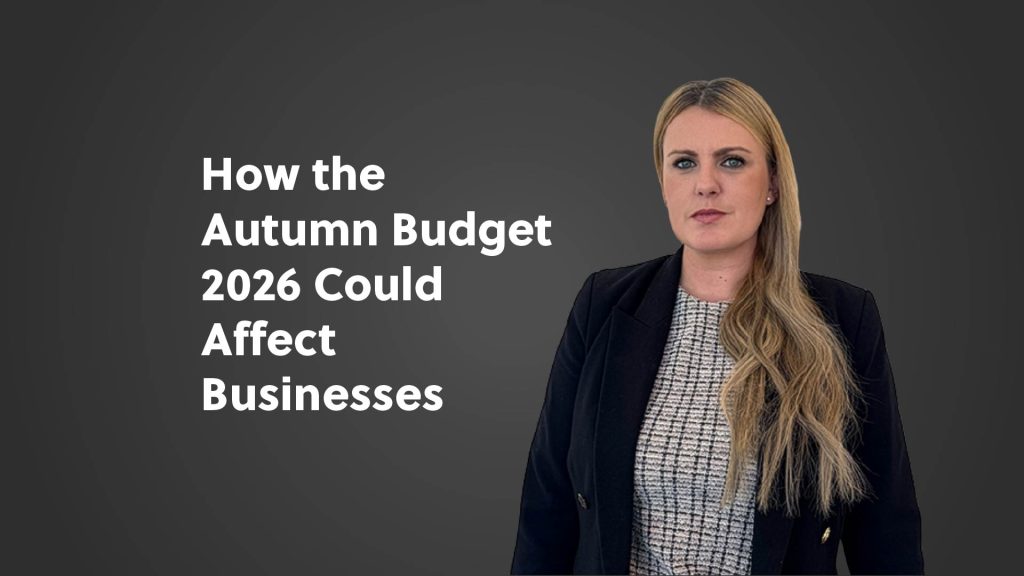
UK Chancellor of the Exchequer John Healey has outlined his plans for the UK economy in the Autumn Budget 2026. We spoke to Kimberley Reid, one of our Insolvency Practitioners here at Liquidation Centre, about the key announcements and what they could mean for businesses.
The announcement comes amidst a backdrop of UK shop inflation at its highest since 2024, and businesses calling for help on tax and VAT, as well as the highest government borrowing costs since 1998.
Healey described the budget as one for “British businesses big and small” but will his plans deliver the support businesses need, or could many still face significant financial challenges?
Key takeaways for businesses from the 2026 Autumn Budget
Here are the announcements most likely to affect businesses, and what Kimberley thinks they could mean for yours.
Business tax changes could offer relief, but cash flow remains vital
Plans to raise the threshold for Small Business Rates Relief from £12,000 to £18,000 were announced in Healey’s budget, and could help eligible high-street businesses reduce their overheads. Additionally, making online marketplaces responsible for collecting VAT from certain third-party sellers could help address concerns about tax compliance and competition between online and physical retailers.

Kimberley Reid, one of our Insolvency Practitioners at Liquidation Centre, says:
“Any reduction in fixed costs will be welcome news for smaller businesses, particularly those on the high street that have faced rising costs from multiple directions over the last few years. Lower business rates could provide some breathing space and improve short-term cash flow.
However, businesses shouldn’t view this as a complete solution. Companies that are already struggling with declining sales, creditor pressure or existing debts may find that rate savings alone are not enough to restore financial stability.
The businesses that tend to perform best during uncertain economic conditions are those that regularly review their financial position and plan ahead. Understanding profitability, cash flow and future obligations remains just as important as any relief announced in the Budget.”
Healey said: “I’m increasing the threshold for small business rate relief for retail, hospitality and leisure businesses from £12,000 to £18,000. That means 70,000 more businesses. I’m not just cutting their rates and taking them out of paying business rates altogether. That means half of our shops, restaurants and gyms pay no business rates at all. And for all other businesses in these sectors, I will freeze their rates in real terms so that none face and above inflation rise for the next two years.”
For smaller firms already struggling with rising costs, reduced overheads may help, but maintaining healthy cash flow and managing existing liabilities will remain essential.
Minimum wage increases could add pressure to business finances
The planned increase to the National Minimum Wage and National Living Wage will mean higher hourly pay for lower-paid workers, but it could also add to operating costs for businesses employing large numbers of staff.
Businesses in sectors such as hospitality, retail and care may feel the impact particularly acutely, as payroll represents a significant part of their day-to-day expenditure. Employers will need to consider how higher wage bills affect their margins and ability to invest or recruit. While the slower rate of increase for 18-20-year-olds may moderate some of the additional costs associated with employing younger workers, businesses will still need to plan for higher wage bills alongside other overheads.
Kimberley Reid adds:
“Higher wages will be welcomed by many workers, but employers will need to carefully assess the impact on their operating costs. For labour-intensive sectors such as hospitality, retail and care, even relatively modest increases can have a significant effect on profitability.
Businesses will need to decide whether they can absorb the additional costs, improve efficiency, increase prices or find savings elsewhere. These decisions are rarely straightforward, particularly in sectors where margins are already under pressure.
The key is planning ahead. Businesses that understand the effect of increased wage costs on their forecasts and cash flow will be in a stronger position to adapt than those that simply react when the bills arrive.”
Founders relief for firms
Healey has announced a new trading allowance, raising the amount people can earn from a new venture tax-free from £1,000 to £3,000. The introduction of a new trading allowance, support for young entrepreneurs and a reduced capital gains tax rate for successful business founders could provide further incentives for people to start and grow businesses in the UK.
John Healey said: “I believe that when business founders take that risk, build an exceptional company, create wealth for Britain, we should recognise that success and keep those people here to invest again. That is why today I’m announcing a founder’s relief, a brand new relief in capital gains tax, a 10% rate on lifetime gains, up to £10m for the founders of our most successful firms.”
However, starting a business is only the first step, and founders will still need to navigate rising operating costs, financial challenges, and uncertainty as they grow.
Kimberley Reid comments:
“It’s positive to see measures designed to encourage entrepreneurship and reward people who take the risk of building successful businesses. Incentives like these can help create confidence for founders looking to start, grow and eventually exit a company.
“However, tax relief is only one part of the picture. Many otherwise successful businesses experience difficulties because growth requires investment, and rapid expansion can place significant strain on working capital and cash reserves.
From our experience, business owners who maintain strong financial controls and seek advice early when challenges arise give themselves far more options if circumstances change. Building a successful company is important, but ensuring it remains financially resilient is equally critical.”
Business Asset Disposal Relief limit cut to £500,000
Directors closing a solvent company through a Members’ Voluntary Liquidation (MVL) will want to check how the Budget affects Business Asset Disposal Relief (BADR). The lifetime limit on gains that qualify for the relief’s 18% rate is being reduced from £1 million to £500,000, for disposals made from 6 April 2027.
Anyone whose qualifying gains fall within the new limit should still be able to benefit from the 18% rate, so the change won’t alter the decision for most directors. Those with larger gains, or who have claimed BADR before, could face a higher tax bill on anything above the limit, which will be taxed at 24%.
Kimberley Reid explains:
“For most directors planning to close their limited company, the Budget is unlikely to have a major impact. The government is reducing the lifetime limit on gains eligible for Business Asset Disposal Relief (BADR) from £1 million to £500,000 from 6 April 2027. Directors whose qualifying gains fall below the new limit, and who meet the eligibility conditions, should still be able to benefit from the 18% rate.
“The change will matter more to directors with larger gains. For a director with £750,000 in qualifying gains who hasn’t used BADR before, the lower limit could mean an extra £15,000 in Capital Gains Tax, as the £250,000 above the limit would be taxed at 24% rather than 18%.
“If you’re already planning to close your company, it’s worth reviewing your options now with your accountant and an insolvency practitioner. The new limit applies to disposals made from 6 April 2027, so the timing of your exit could be important. But don’t assume that starting an MVL quickly, or receiving an initial distribution, will secure the current rules.
Get advice on when your disposal will take place, any previous BADR claims and any transitional rules before deciding what to do.”
Alcohol duty relief for small brewers
The planned £10 million in alcohol duty relief for around 2,000 small British brewers could help ease some of the cost pressures facing independent producers. However, breweries will still need to manage wider operating expenses, including energy, ingredients, staffing and distribution, to maintain profitability.
Kimberley Reid states:
“Independent breweries will welcome any measure that helps reduce cost pressures, particularly at a time when many are continuing to face higher production, energy and distribution costs. While duty relief may improve margins, it is unlikely to remove the wider financial challenges affecting the sector.
Consumer spending patterns, rising operating costs and increased competition will continue to influence profitability. The most resilient businesses are often those that regularly review their financial position and plan ahead.
Taking action early can preserve options and prevent financial difficulties from escalating into a situation where more formal restructuring or insolvency advice is needed.”
Not sure where your business stands after the Budget? Get in touch with our team for a confidential discussion about your options.