
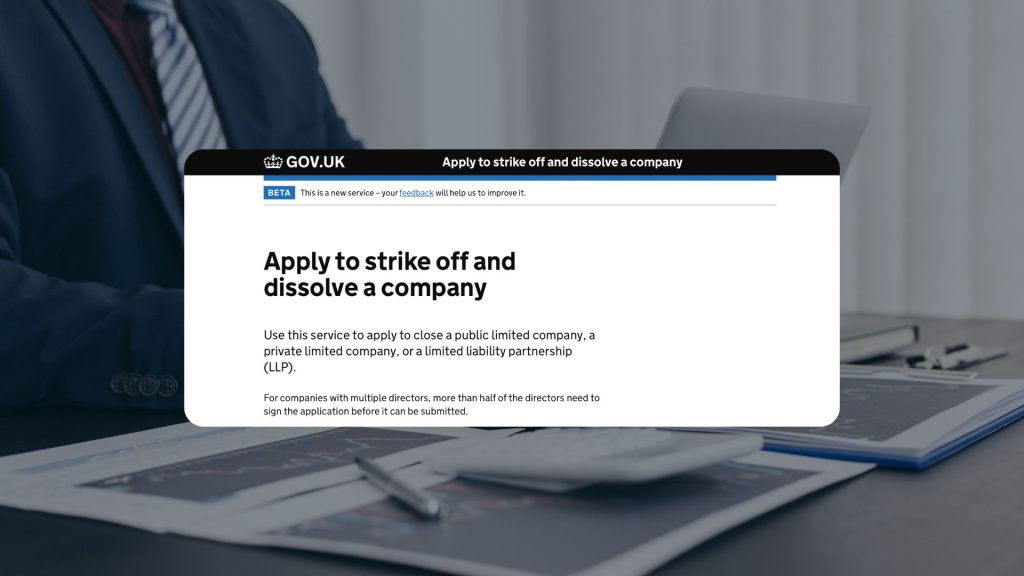
Receiving notice that your company may be struck off the Companies House register can be worrying. In other words, your business will no longer exist and will be removed from the register if you’re struck off.
In some cases, a company strike off can be stopped.
Here at the Liquidation Centre, we can provide guidance on:
- How to strike off a company (if this is the desired route).
- How to stop a company strike off (should you wish to do so).
We can also discuss the alternatives to striking off a company, such as liquidation.
What does striking off a company mean?
A company strike off is the process of removing your business from the Companies House register. After this point, it’s no longer a legally recognised enterprise and ceases to exist.
Why do companies get struck off?
Companies get struck off the register for various reasons, such as:
- The company is no longer needed and has finished its project, become unfeasible, or is dormant.
- The directors want to retire, and there is no one to run the company in their place.
- It becomes more cost-effective to close the company than keep it running.
- The business has failed to send annual accounts or confirmation statements to Companies House.
- The company doesn’t have an active director.
- Official letters have been returned, having bounced back from the registered office address.
- The company was registered using false or misleading information.
What does strike off mean for a company?
Once a company is struck off from the Companies House register, then it can no longer trade, enter into contracts, or hold any assets in its own name. As it no longer exists as a legal entity, bank accounts are usually frozen, which can make it difficult to deal with remaining funds or ongoing payments.
Any remaining assets (such as money in bank accounts and property) could pass to the Crown under bona vacantia procedures.
Directors may face issues relating to outstanding debts or unresolved matters after the company has been removed from the register. This may include addressing outstanding liabilities, unpaid taxes, or unresolved compliance issues.
In some situations, action may be taken to restore the company to the register to address these matters. Allowing a company to be struck off without proper planning can create complications further down the line. This is why understanding how company strike off works and the implications for those involved with the business can help directors decide on the best course of action and whether striking off the company is the right option for them.
What does strike off mean in company status?
A company strike off means that the business has closed down and its name is removed from the official government register at Companies House. This means the company no longer exists as a legal business and must stop trading.
After this point, the status of the company is updated to dissolved.
Compulsory strike off
What is a compulsory strike off?
A compulsory company strike off is instigated by Companies House, not the directors of the company. Companies House will issue warning letters before taking further action, allowing directors time to respond before the formal strike-off process begins.
Why would a company go through a compulsory strike off?
Compulsory strike off happens when a company fails to meet its legal requirements and responsibilities, such as filing annual accounts or confirmation statements. This prevents Companies House from maintaining accurate public records of the company and keeping company details up to date.
In this situation, directors don’t apply for strike off; it’s often a result of repeated non-compliance.. Some businesses may be treated as inactive if such documents have not been submitted for an extended period.
If your company is at risk of being struck off by Companies House, you can tell us about your company and we will help by reviewing your options.
Voluntary strike off
What is a voluntary strike off of a company?
A voluntary company strike off is when directors choose to close a company that is no longer needed. The business must meet certain eligibility requirements, such as not trading for a set period and having no outstanding debts or unresolved legal issues.
Why would a company go through a voluntary strike off?
Businesses may choose voluntary strike off when a company is no longer required, has served its purpose, or is not financially viable for it to continue.
During voluntary liquidation, directors can control the timing and preparation. This makes the process more planned and structured than a compulsory strike off, enabling an orderly closure of the business.
How to strike off a company
How to inform HMRC of company strike off
There is no need to file a separate form when informing HMRC of a company strike off. Instead, send a copy of your Companies House ‘Strike Off Application’ (DS01) to HMRC within seven days of submitting it. You should also send a copy to any other interested parties within seven days, including shareholders, employees, and pension managers.
Alongside this, you should file your final tax returns, close any remaining tax schemes, and pay any outstanding liabilities, such as corporation tax, PAYE, national insurance, and any other tax balances owed.
How long does it take to strike off a company?
A compulsory strike off typically takes around three to six months, from when initial warning letters are issued to the final Gazette notice (provided no objections are made or action is taken to resolve the situation).
It normally takes Companies House one to two weeks to review your application (DS01) and publish the first notice. From here, the Gazette Notice period takes exactly two months to allow for any public or creditor objections.
The final dissolution is then published, and the company is officially removed from the register.
How much does it cost to strike off a company?
The cost to strike off a company in the UK ranges from £13 for an online application and up to £18 for a paper application.
In order to do this, the following conditions must be met:
- The DS01 form must be signed by a majority of the company’s directors.
- The company must not have traded, changed its name, or taken part in any business activity within the previous three months.
- Copies of the DS01 must be sent to all stakeholders (creditors, shareholders, and employees) within seven days of submission.
How to strike off a dormant company
To strike off a dormant, limited company in the UK, it must not have traded, sold stocks, or changed its name within the last three months. It must also not have any active agreements with creditors or be subject to liquidation.
Providing this is the case, you can close any business accounts, file a DS01 with Companies House, and notify any shareholders, creditors, employees, and HMRC of your intentions to strike off the business.
Any funds or property should be withdrawn or transferred before applying to strike off your dormant company. After this point, any remaining assets will pass to the Crown.
Once all of this is complete, Companies House will publish a notice in The Gazette. Providing there are no objections within two months, your company will be struck off the register and cease to exist.
Apply to strike off a company
When can you strike off a company?
You can apply to strike off a company after it stops trading, has paid all of its debts, and meets a set of specific legal requirements.
Your business must not have traded, sold stocks, or changed its name within the last three months. There must be no ongoing legal cases, liquidation threats, or active agreements with creditors, such as a Company Voluntary Arrangement (CVA).
What to do if you owe money when striking off a company?
If you owe money, you cannot opt for a voluntary strike off of your company. Instead, you must either settle all outstanding debts, switch to a formal liquidation process, or address the demands of your creditors. This may involve settling any outstanding liabilities, such as clearing bills, loans, supplier balances, and taxes owed to HMRC.
You must then stop trading, selling, or changing the company name for at least three months before you can consider a voluntary strike off.
If you don’t pay off debts, then your creditors or HMRC can block any strike-off application. Hiding debts or failing to notify the correct people can result in heavy fines or a ban on you becoming a company director in the future.
If your business is insolvent and you cannot meet the above requirements, then you could explore a Creditors’ Voluntary Liquidation (CVL) as an alternative to a strike off.
How to strike off a company online
To strike off a company online, you must submit a DS01 form via the Gov.uk website. This will cost £13 if you apply online and requires your company’s number, authentication code, and approval from a majority of shareholders and directors.
Providing you have met the eligibility criteria, you can sign into the Companies House application service to complete the DS01 form and pay the associated fee.
Once this is done, you must notify all interested parties (such as shareholders, creditors, and employees) within seven days of submitting the strike-off application.
Companies House strike-off procedure
The compulsory strike-off process involves several formal stages set out by Companies House, each allowing time for action before a company is removed from the register.
These are:
1. Warning letters from HMRC
Companies House begins the compulsory strike-off process by sending out warning letters to the company’s registered office. These reminders ask for overdue documents such as annual accounts or confirmation statements to be provided. Directors are given time to respond and bring filings up to date before further action is taken.
2. First Gazette notice for compulsory strike off
If no response is received, then a First Gazette notice for compulsory strike off is published. This public notice signals Companies House’s intent to strike the company off the register.
From here, the company is at risk, and third parties can see that strike-off action has begun.
3. Objection period
Following the notice, there is a set period during which interested parties, including directors and creditors, can raise objections. This is an opportunity to raise valid reasons, such as ongoing trading or unresolved liabilities.
4. Final Gazette notice and company dissolution
If no action or objection is made, then a Final Gazette notice is issued. At this stage, the company is officially struck off the register and dissolved, bringing an end to its legal existence.
Creditor objections when striking off a company
Creditor objections happen when someone who’s owed money stops the company from closing, pausing the strike-off process.
They can object because:
- They’re still owed money through unpaid bills. This could include suppliers, banks, or lenders.
- Taxes or filings are in arrears and missing.
- Legal rules were broken.
- False claims were made in the application, such as hidden debt and the directors failing to notify creditors about the proposed closure.
- Active legal claims still exist, such as a pending lawsuit or a formal debt recovery is in place.
Anyone owed money can file an objection with Companies House after the notice appears in The Gazette.
What are the alternatives to striking off a company?
A company strike off is not always the most suitable outcome for your business. Other options may be more appropriate depending on your circumstances. But this depends on your company’s financial situation.
Alternatives to striking off a company is company liquidation. Company liquidation is better suited where debts are involved. This follows a formal insolvency process that addresses creditor interests and provides a structured route to closing the business.
Choosing the right option can help avoid issues later. Speak with a member of the team to see which route is best for you and your company.
How to restore a company after it’s been struck off
A company can be restored after being struck off. This is usually required to deal with any unresolved debts, assets, or legal matters.
This can be done through two methods:
1. Administrative restoration
If you’re a former director or shareholder of the company that was trading when dissolved. This must happen within six years of dissolution and cannot be applied to companies that voluntarily applied for strike off. This is done by submitting an RT01 form and a fee of £341 to Companies House. Any missing paperwork (such as overdue accounts and confirmation statements) must be submitted along with any late filing penalties. You must also obtain a waiver letter for any assets that passed to the Crown.
2. Court order
For those voluntarily struck off by the directors more than six years ago and where administrative restoration has been refused, or if you’re a creditor as opposed to a director or shareholder. You’ll need to submit a Part 8 claim form and pay the associated court and registrar fees, alongside witness statements of why the company was dissolved and why you want it restored. The claim must be served to relevant government legal departments, such as the Treasury Solicitor, where assets that passed to the Crown are concerned.
How can the Liquidation Centre help me strike off my company?
The Liquidation Centre can help in many ways when it comes to striking off a company.
Our team is here to talk you through your options for closing a company and choosing the best solution for you and your business. We can advise on different stages of the process, from submitting an application to stopping a strike off altogether.
We’re here to answer any questions you may have when it comes to striking off a company from the register. Just get in touch today for more information or get a free, no-obligation quote to see how we can help you close down your company in the most efficient and effective way.
FAQs about company strike offs
What is a company strike off? ▸
A company strike off is when a business is legally closed down (dissolved) and removed from the official government register at Companies House.
What is a company strike-off notice? ▸
A company strike-off notice is a formal public warning notifying that a business is being removed from the corporate register at Companies House. This can be done voluntarily by the company’s directors or through compulsory action by Companies House or creditors due to outstanding debts or missed filings.
A company strike-off notice is published in The Gazette, the UK’s official public record. It lasts for two months to allow for any objections.
What does an active proposal to strike off a company mean? ▸
An active proposal to strike off means that Companies House has taken formal steps to remove a company from the official public register. This means it will soon dissolve and no longer cease to exist as a legal entity. It indicates that a public notice has been published in The Gazette with a two-month window for any interested party to object to the decision.
How to dissolve a company ▸
To dissolve a solvent company in the UK, you must:
- Cease all trading for at least three months.
- Settle any outstanding debts and close your accounts. This could involve paying off creditors, cancelling your VAT registration with HMRC, and shutting down business bank accounts in your company’s name.
- Distribute any remaining assets or cash to shareholders.
- Prepare your final company tax return and accounts for HMRC, stating that these are your final documents.
- Apply to Companies House to strike off your company using a DS01 form.
- Notify any interested parties that you intend to close the company within seven days of submitting your application. This includes shareholders, creditors, employees, and HMRC.
Can you strike off a company with debts? ▸
No, to sure a strike-off your company must be solvent and have no outstanding debts. HMRC monitors strike-off applications in the Gazette, and if your company still owes money it can block the application. Creditors who are owed money can also object. If a director tries to strike-off an insolvent company, they will be breaching their director duties and may risk personal liability.
A struck-off company can also be restored to the register at Companies House at a later stage if it transpires that unpaid debts remain or financial misconduct has taken place. Likewise, striking off a company with an active government bounce-back loan is not allowed and can trigger fraud investigations or director disqualification. Therefore, it’s important to know the rules and regulations before you consider striking off your company.
How to object to a company strike off ▸
To object to a company strike off, you must be a creditor, shareholder, or interested party with a valid reason. This could include unpaid debts, pending legal action, or false declarations made during the original strike-off application.
You can only submit an objection once the notice appears in The Gazette and at least two weeks before the two-month deadline. This can be done either online or by post and must include any relevant, supporting evidence, such as unpaid bills, contracts, or written statements.
How to stop a company strike off ▸
To stop a compulsory company strike off, you should file any outstanding overdue documents, such as annual accounts and confirmation statements, and contact Companies House to confirm your company is still actively trading.
You should ensure that no creditors or HMRC object to this process. If they’re still owed money, then you should settle these debts immediately.
If you instigated a voluntary strike off, then you can simply notify Companies House that you wish to withdraw your application.
What happens if a company strike off is suspended? ▸
If a company strike off is suspended, then the dissolution process comes to a halt, and the company remains open for business and active on the public register at Companies House. Creditors are still entitled to pursue any unpaid debts or force a court-ordered shutdown of the company if they’re still owed money.
Directors must continue to follow all legal and financial requirements for running the business, including settling any money owed to creditors and fixing issues surrounding missing paperwork.
If the company cannot pay its debts, then you may need to start a formal closing process such as a CVL.